OpenAI Expands ChatGPT Ads: A Targeted Alternative to Traditional Social Media
The expansion of OpenAI’s ChatGPT advertising pilot into global markets offers small businesses a high-intent alternative to saturated social media channels. By leveraging conversation-based targeting that prioritizes user privacy and response integrity, brands can reach consumers at critical decision-making moments without compromising trust.
Pathway Knowledge Desk
New Delhi | May 13, 2026
The digital advertising landscape is undergoing a significant transition as conversational AI begins to offer alternatives to increasingly cluttered social media feeds. On May 7, 2026, OpenAI announced the expansion of its ChatGPT advertising pilot into five major global markets: the United Kingdom, Japan, South Korea, Mexico, and Brazil. This move follows earlier expansions into Canada, Australia, and New Zealand, building upon the program’s initial U.S. launch on February 9, 2026. For small businesses, this emerging AI Media model represents a shift toward contextually relevant engagement rather than broad demographic targeting.
The effectiveness of this model lies in its “Mission Alignment” framework, which uses advertising revenue to support the infrastructure required for the Free and Go subscription tiers. Unlike traditional social media platforms that often rely on invasive tracking across various websites, ChatGPT advertisements are matched to users based on the topic of the current conversation, previous chats, and specific interactions with past advertisements. OpenAI maintains that these conversational interfaces allow brands to be more useful by appearing at moments when users are actively seeking information or making decisions, allowing products to fit naturally into the user’s process.
A critical distinction for brands concerned about long-term reputation is the strict separation between commercial content and AI utility. OpenAI has established a central tenet that advertisements do not influence the actual answers ChatGPT provides to users. All responses remain independent, unbiased, and optimized for helpfulness rather than advertiser interests. When a brand placement does occur, it is clearly labeled as sponsored and visually separated from the organic chat output to ensure total transparency. This approach has yielded encouraging early results, with the company reporting no negative impact on consumer trust metrics and low dismissal rates for advertisements.
Privacy remains a cornerstone of the pilot’s design, addressing a major pain point for modern consumers and small business marketers alike. Advertisers are strictly restricted from accessing personal details, individual chat histories, or user memories. Instead, businesses receive only aggregated performance data, such as total clicks or views, to measure the success of their campaigns. The system also includes robust safety guardrails, prohibiting ads from appearing near sensitive or regulated topics, including health, mental health, and politics. Additionally, the platform automatically excludes users predicted to be under the age of 18 from receiving any advertisements.
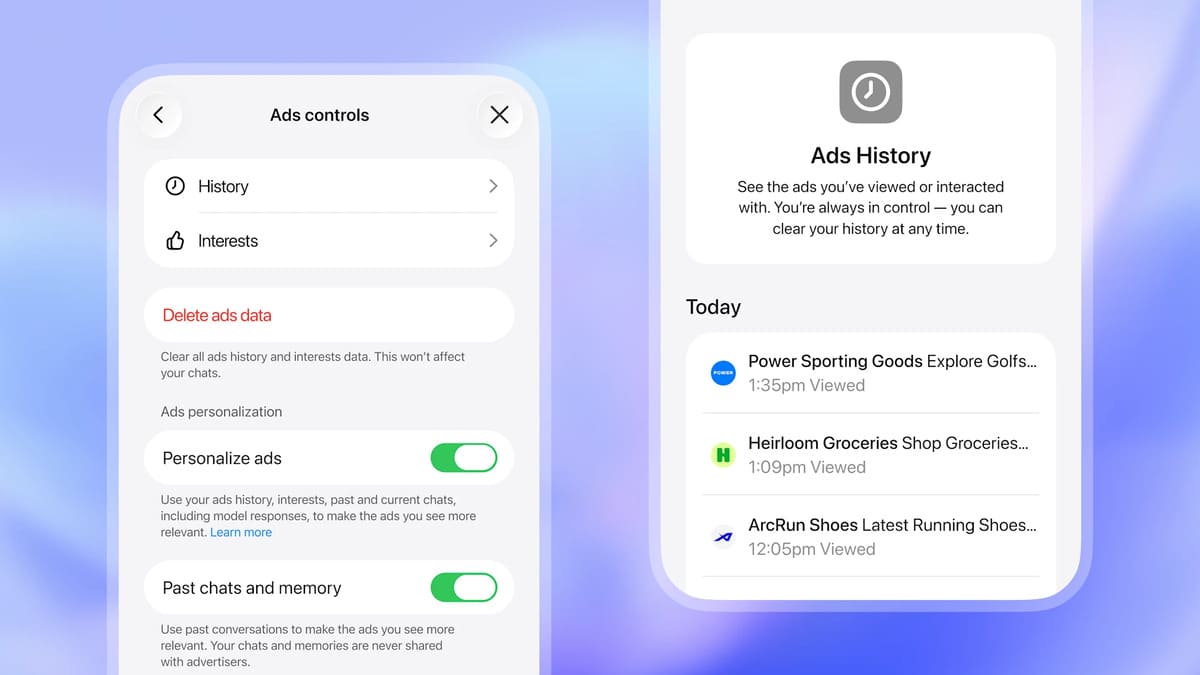
The pilot also emphasizes user agency through a dedicated settings interface that grants consumers granular control. Users have the ability to dismiss specific ads, provide feedback, or delete their advertising data with a single tap. A specialized “Ads History” feature allows for the review and management of personalization preferences at any time. For those who prefer a completely ad-free experience, OpenAI continues to offer Plus, Pro, Business, Enterprise, and Education tiers that remain free of any promotional content. Furthermore, users on the Free tier can choose to opt out of ads entirely in exchange for a lower daily message limit.
As OpenAI continues to explore new formats and buying models, the conversational ad space offers a unique opportunity for businesses to connect with audiences through relevance rather than volume. Small businesses interested in participating in these new international markets are encouraged to sign up through OpenAI’s dedicated advertiser portal to reach users in a more focused, utility-driven environment.
